
The Economic Impact of Abortion Restrictions: What the Research Shows
When people think about abortion policy, they often think about healthcare, personal decisions, or legal debates.
Increasingly, economists are looking at another question: How do abortion restrictions affect the economy?
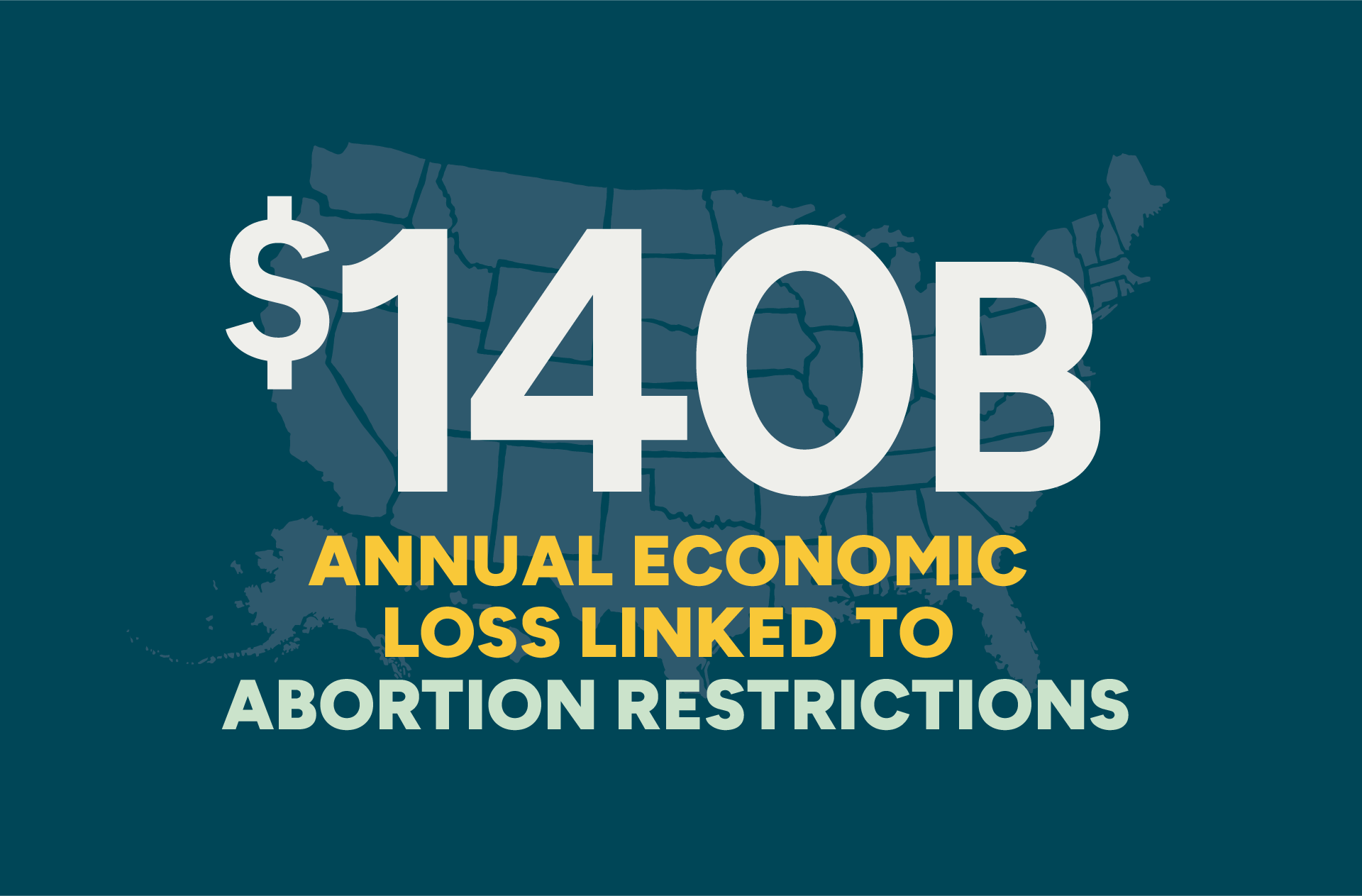
A growing body of research suggests that reproductive healthcare access influences workforce participation, earnings, educational attainment, business growth, and even where people choose to live and work. A new report from the Institute for Women’s Policy Research (IWPR) estimates that abortion restrictions are costing the U.S. economy an average of $140 billion every year in lost earnings and economic activity.
For Iowa, where healthcare workforce shortages, maternity care deserts, and population growth are already ongoing challenges, these findings raise important questions about the long-term economic impact of healthcare policy.
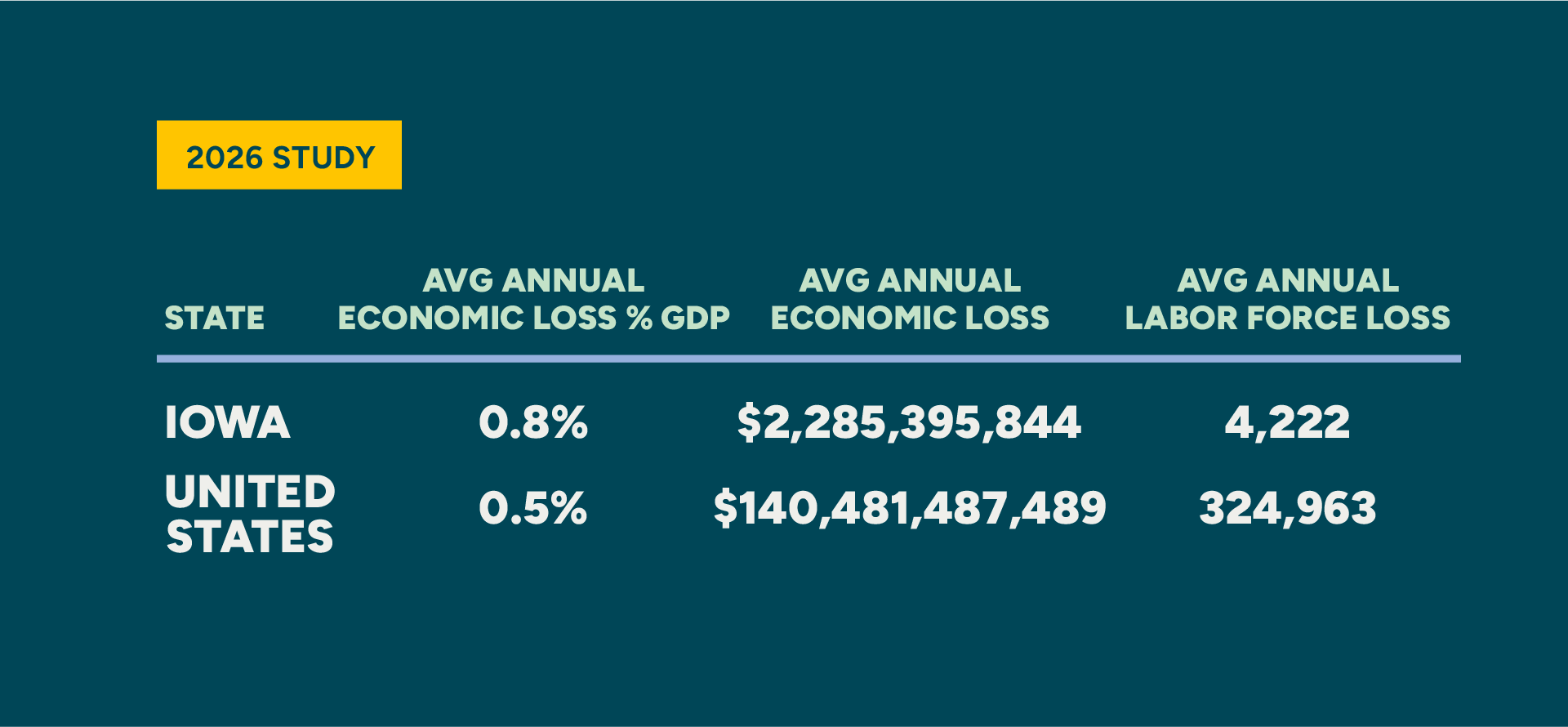
The $140 Billion Question
According to IWPR, abortion restrictions affect economic outcomes in several ways:
- Reduced workforce participation
- Lower lifetime earnings
- Delayed career advancement
- Increased financial strain from healthcare and childcare costs
- Reduced educational opportunities
The report estimates that restrictions on reproductive healthcare reduce women’s earnings and labor force participation, creating ripple effects throughout local and national economies.


By the Numbers
$140 billion
Estimated annual economic loss nationwide linked to abortion restrictions
1 in 4 women
Will have an abortion by age 45
More than half
Of all abortions in the U.S. are now medication abortions
Thousands of workers
Have reported considering relocation due to reproductive healthcare policies
Why Economists Are Paying Attention
Researchers have long studied the connection between economic opportunity and access to reproductive healthcare.
When people can make decisions about if and when to start a family, they are often better able to:
- Complete education or job training
- Pursue career opportunities
- Change jobs for higher wages
- Start businesses
- Build long-term financial stability
Melissa Mahoney, a senior researcher at IWPR, described abortion restrictions as an economic issue because they affect career and employment decisions.
Research has found that women who are denied wanted abortions are more likely to experience financial hardship, increased debt, and lower household income years later compared to those who received care.
Businesses Are Paying Attention Too
The economic effects aren’t limited to individuals. Employers across industries have increasingly cited reproductive healthcare access as a workforce issue.
Several studies have found that workers, particularly younger workers and college graduates, are less likely to relocate to states with restrictive reproductive healthcare policies. A 2024 survey found that a significant share of workers would consider turning down a job offer or relocating because of reproductive healthcare restrictions.
For states competing for talent, workforce recruitment has become part of the conversation.
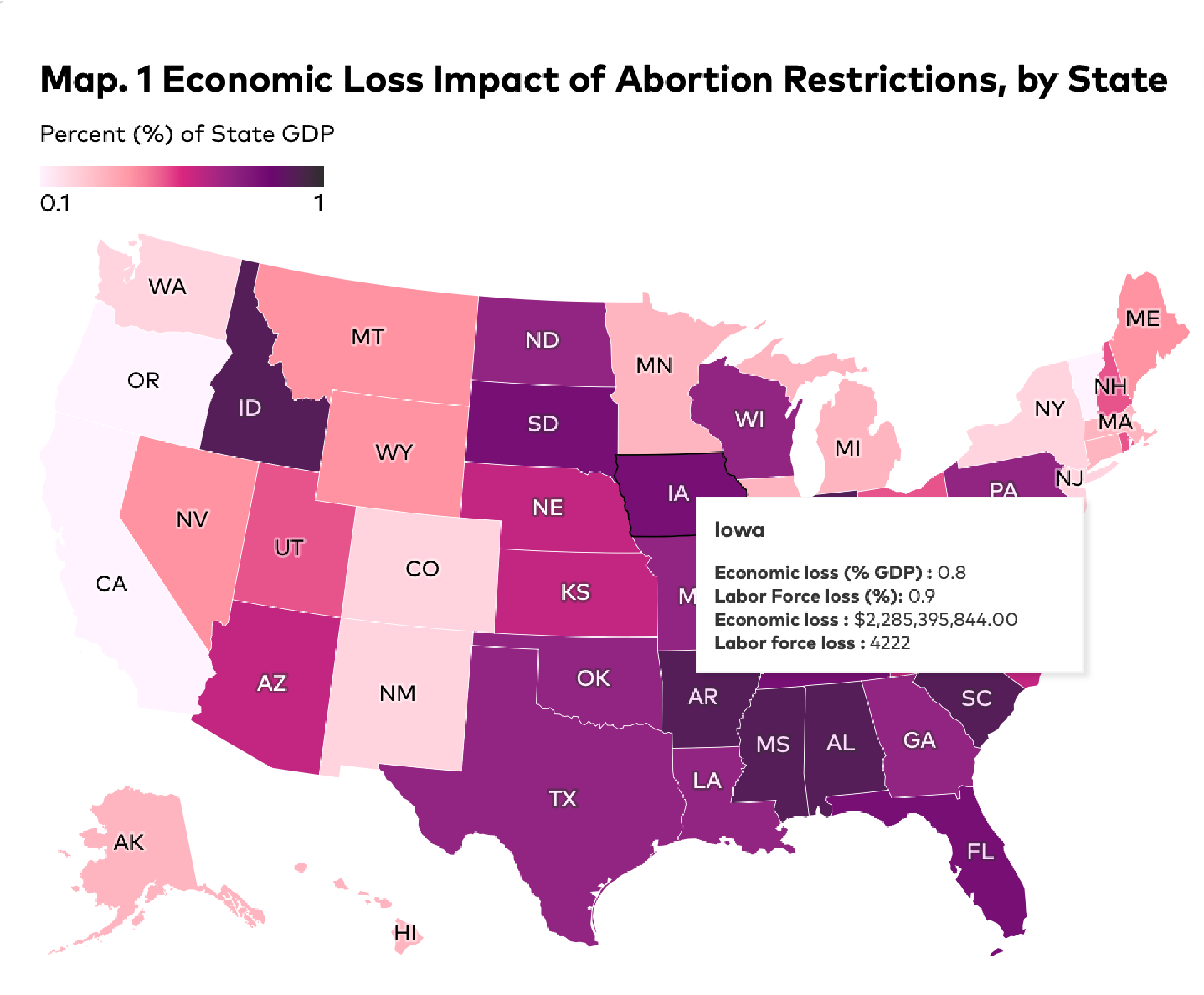
What This Means for Iowa
Iowa is already facing several economic and healthcare challenges that intersect with reproductive healthcare access.
Healthcare Workforce Shortages
Many Iowa communities are experiencing shortages of:
- OB-GYNs
- Family medicine physicians
- Labor and delivery providers
- Rural healthcare workers
Recent research has warned that states with abortion restrictions may face increased difficulty recruiting and retaining healthcare professionals.
Growing Maternity Care Deserts
More than half of Iowa counties lack obstetric services. As labor and delivery units close and provider shortages continue, many Iowans must travel farther for prenatal care, delivery services, and emergency pregnancy care.
Learn more:
Iowa’s Growing Maternity Deserts
Healthcare Access and Local Economies
Healthcare is one of the largest employment sectors in many Iowa communities.
When clinics close or providers leave, the impacts extend beyond healthcare. Communities can experience:
- Reduced economic activity
- Fewer jobs
- Lower population growth
- Increased barriers to attracting new residents and businesses
Recent closures across Iowa include labor and delivery units, family medicine clinics, and urgent care facilities.
Learn more:
MercyOne Clinic Closures Highlight Growing Healthcare Access Concerns in Iowa
The Bigger Picture
People often discuss reproductive healthcare as a personal issue. Increasingly, economists are examining it as an economic issue as well. The question is no longer only how abortion restrictions affect individual patients.
Researchers are also studying how those policies affect:
- Workforce participation
- Earnings
- Business growth
- Healthcare access
- Population trends
- State and local economies
While opinions on abortion vary, economic research continues to expand our understanding of how healthcare policy can influence financial outcomes for individuals, families, employers, and communities.
As Iowa continues to address workforce shortages, healthcare access challenges, and economic growth, these findings add another dimension to the conversation.
For more reproductive rights information and updates on Iowa healthcare access, visit our resources page or sign up for our newsletter.
Empower change.
Sign up for our newsletter and stay informed on reproductive healthcare issues in Iowa.